Decoding Workplace Safety: The Vital Role of Business Figures and Hazard Symbols in Modern Industry
In the bustling ecosystem of modern business and industry, communication often transcends spoken language. Whether on a construction site in Tokyo, a manufacturing floor in Detroit, or a corporate office in London, the need for immediate, universal understanding is paramount. This is where the intersection of professional businessman vector illustrations and job hazard symbols becomes not just a design choice, but a critical component of operational safety and brand identity. Understanding these visual elements is essential for anyone involved in workplace management, graphic design, safety compliance, or creative entrepreneurship.
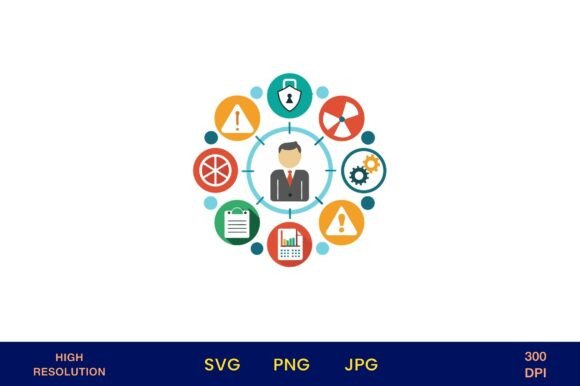
At first glance, a vector image of a businessman surrounded by safety icons might seem like a simple piece of clip art. However, beneath the surface lies a sophisticated language of risk management and professional standards. These graphics serve as the bridge between complex safety regulations and human behavior, ensuring that warnings are seen, understood, and acted upon instantly.
The Universal Language of Hazard Symbols
Safety is not optional; it is the foundation upon which sustainable industries are built. Yet, safety manuals can be dense, and verbal instructions can be lost in the noise of a busy work environment. This is the primary purpose of job hazard symbols. These standardized icons act as a visual shorthand, conveying critical information about potential dangers without the need for translation.
Consider the classic "slippery floor" icon or the symbol indicating "high voltage." These images are designed to trigger an immediate cognitive response. When a worker sees a yellow triangle with an exclamation mark, their brain processes caution before they even read the accompanying text. This reaction time can be the difference between a safe shift and a workplace accident.
The significance of these symbols extends beyond mere warning. They represent a company's commitment to its most valuable asset: its people. By integrating these symbols into daily visual communications—whether on signage, training manuals, or digital presentations—businesses foster a culture of awareness. It shifts the mindset from reactive damage control to proactive prevention.
Why Vector Illustrations Matter
In the digital age, the format of these illustrations is just as important as the content. This is where vector illustrations shine. Unlike raster images (like JPEGs or standard photos) which can become pixelated and blurry when enlarged, vector graphics are mathematically defined paths. This means they can be scaled from a tiny sticker on a hard hat to a massive billboard without losing any clarity.
For professionals downloading high-quality assets, such as a 4500px x 4500px PNG with a transparent background, the versatility is unmatched. A crisp, clean image at 300 DPI ensures that whether the graphic is used for a web banner or a printed safety poster, the edges remain sharp and the colors vibrant. This level of quality reflects professionalism; a blurry safety sign might inadvertently suggest that the company cuts corners elsewhere, including in actual safety protocols.
Bridging Creativity and Compliance
One common misunderstanding is that safety graphics must be dry, boring, or strictly utilitarian. While compliance is non-negotiable, the way these messages are delivered can be engaging and visually appealing. This is where the concept of a professional businessman vector illustration surrounded by work safety icons becomes a powerful tool for designers and business owners alike.
Imagine a training presentation where a stylized, friendly business figure is depicted navigating a landscape of floating safety icons. This approach humanizes the data. It transforms abstract rules into a narrative that employees can relate to. It suggests that safety is not a barrier to productivity, but a companion to the professional journey.
Furthermore, these assets are not limited to industrial settings. The principles of risk assessment and clear communication apply to offices, event planning, and even home-based businesses. A graphic designer creating a brand identity for a new logistics company can use these elements to instantly communicate reliability and care. A wedding planner organizing a large event can utilize similar iconography to denote restricted areas or emergency exits, ensuring guest safety with style.
Practical Applications Across Industries
The utility of high-resolution, transparent safety-themed graphics is vast. Because these digital products are versatile, they fit seamlessly into a wide array of projects. Here is how different sectors can leverage these resources:
- Social Media Design: Create engaging posts for LinkedIn or Instagram that highlight "Safety Tip of the Week," using crisp icons to grab attention in a crowded feed.
- Corporate Branding: Incorporate safety motifs into letterheads, business cards, and email signatures to reinforce a culture of responsibility.
- Educational Materials: Develop interactive quizzes, flashcards, or digital textbooks for vocational schools and university safety courses.
- Merchandise and Apparel: Print designs on t-shirts, mugs, and pillows for company retreats or safety awareness campaigns. High DPI ensures the print quality remains professional.
- Event Planning: Use the graphics for seating charts, table numbers, or "Save the Date" cards for industry conferences, adding a thematic touch that resonates with attendees.
- Scrapbooking and Albums: Document corporate milestones, construction project completions, or team-building events with themed decorative elements.
The Digital Advantage: Instant Access and Flexibility
In today's fast-paced world, waiting for physical proofs or shipping delays is inefficient. The shift toward digital products allows for immediate implementation. When you download a high-quality file, you gain the autonomy to print your own materials on demand. This is particularly useful for small businesses or independent contractors who need to adapt quickly to changing project requirements.
Having a file with a transparent background is a game-changer for customization. It allows the designer to place the businessman figure and his surrounding icons over any colored background, texture, or photograph without unsightly white boxes ruining the composition. Whether overlaying the image on a blueprint for an architectural proposal or placing it on a vibrant gradient for a marketing flyer, the flexibility is endless.
Moreover, the resolution matters immensely for print. A standard web image is usually 72 DPI, which looks fine on a screen but turns muddy when printed. A file provided at 300 DPI is the industry standard for professional printing. This ensures that fine lines in the hazard symbols remain distinct and that text (if added later) remains legible. It is a detail that separates amateur efforts from professional-grade output.
Clarifying Common Assumptions
It is important to clarify a few points for those new to using digital design assets. First, purchasing a digital download does not mean receiving a physical item. There is no shipping involved; the value lies in the immediate access to the source file. Second, while these images are high quality, they are tools. Their effectiveness depends on how they are used. Placing a hazard symbol randomly does not make a space safe; it must be part of a broader strategy of education and enforcement.
Additionally, while vector illustrations are scalable, users must ensure they are using the correct file format for their specific software. PNGs are excellent for general use and maintain transparency, but for further editing of shapes and colors, the original vector source (like AI or EPS) might be preferred if available. However, a high-resolution PNG is often sufficient for 90% of end-user applications, from web use to large-format printing.
Building a Safer, More Visual Future
As we move forward, the integration of visual literacy in business will only grow. We are becoming a more visual society, processing images faster than text. Leveraging professional businessman vector illustrations alongside industry safety icons is a smart strategy for communicating complex ideas simply.
Whether you are a safety officer looking to refresh your training deck, a graphic designer building a brand for an industrial client, or an educator creating materials for the next generation of workers, these tools provide the foundation for clear communication. They remind us that behind every statistic and regulation, there are people—represented by the business figure—who need to go home safely at the end of the day.
By utilizing high-quality, versatile digital assets, we empower ourselves to create materials that are not only compliant but also compelling. We turn the mundane necessity of safety into a visible, integral part of our professional identity. So, the next time you see a vector of a professional surrounded by safety gear, remember: it is more than just a picture. It is a symbol of care, a tool for education, and a testament to the power of clear, visual communication in our modern world.
Remember: When selecting digital assets for professional use, always verify the resolution (aim for 300 DPI for print) and ensure the background is transparent for maximum design flexibility. Your attention to these details reflects the quality of your final product.