Meet the Dapper King of the Swamp: Elevating Projects with a Hand-Drawn Alligator Character PNG
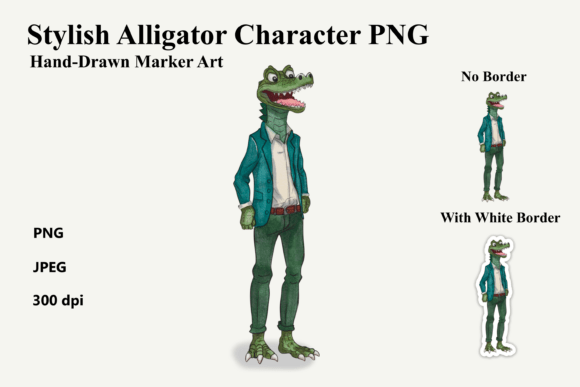
In the crowded landscape of digital design, finding an asset that balances personality with professionalism can feel like searching for a needle in a haystack. Enter the Hand-Drawn Alligator Character PNG, a dapper king of the swamp dressed in a sharp teal suit. This isn't just another clipart image; it is a hand-illustrated piece featuring rich textures and confident, friendly expressions created with professional markers. For creators looking to infuse their work with a touch of cool sophistication, this reptile gentleman offers a unique visual voice. However, simply downloading a file isn't enough to guarantee success. Many designers, small business owners, and hobbyists stumble over technical details and usage rights that can undermine the quality of their final product.
Understanding what makes this specific asset valuable is the first step. Unlike generic vector graphics that often look sterile, this character boasts authentic artistic feels through visible marker strokes. It comes in multiple formats, including a high-resolution 300 DPI clean version, a version with a white sticker border, and a JPEG on light paper texture. These variations are designed for versatility, whether you are creating trendy apparel prints, unique planner icons, or wall art for modern nurseries. Yet, the transition from "downloading" to "creating something great" is where mistakes frequently happen.
The Resolution Trap and Print Quality Pitfalls
One of the most common misunderstandings among beginners involves resolution. You might see an image on your screen that looks crisp and clear, only to print it on a T-shirt or a large poster and discover it looks pixelated or blurry. This happens because screen resolution (72 DPI) differs vastly from print resolution. The Hand-Drawn Alligator Character PNG included in this pack is provided at 300 DPI, which is the industry standard for high-quality printing.
A frequent error occurs when users resize these images incorrectly. Stretching a small image to fit a large canvas degrades the quality immediately, regardless of the original DPI. To avoid this, always check the pixel dimensions before placing the image in your design software. If you are printing on tote bags or creating decals, ensure the file size matches your physical output requirements. Do not assume that because it is a "high-resolution" file, it is infinitely scalable like a vector. Respect the raster limits of the PNG format to maintain those crisp, professional marker strokes that give the alligator his charm.
Navigating Backgrounds and File Formats
Another area where creators often lose efficiency is in the selection of the wrong file format for the wrong medium. This download includes both PNG and JPEG options, each serving a distinct purpose. The PNG files feature transparent backgrounds, making them ideal for layering over colored fabrics, digital websites, or complex graphic layouts. Conversely, the JPEG version sits on a light paper texture, perfect for projects where a tactile, organic feel is desired without the need for manual texturing.
A costly mistake involves trying to remove the background from the JPEG version manually. Many users attempt to use "magic wand" tools to erase the paper texture, resulting in jagged edges and lost detail around the fine marker lines. Instead, leverage the included transparent PNGs for clean integration. If you desire the paper look, use the dedicated JPEG. Furthermore, pay attention to the version with the white sticker border. This is pre-rendered for specific use cases like die-cut stickers. Attempting to add a white stroke effect in post-production can often look artificial compared to the hand-drawn aesthetic of the included border file. Using the right file from the start saves hours of editing time and preserves the integrity of the illustration.
Branding Consistency and Color Management
For entrepreneurs and marketers using this alligator as a small business mascot, color consistency is paramount. The character is defined by his sharp teal suit. A common oversight occurs when designs are moved between different devices or printing methods without color profile management. The teal might appear vibrant on your calibrated monitor but turn muddy or overly blue on a cheap home printer or a specific print-on-demand service.
To mitigate this, always request a proof or test print before committing to a large run of merchandise. Understand that the "authentic artistic feel" relies on the nuance of the marker strokes. If the contrast is crushed during compression for web use, those subtle textures disappear, leaving a flat, less engaging image. When preparing files for web use, such as blog headers or social media posts, optimize the file size without aggressive compression that sacrifices the detailed shading of the suit and scales. Balancing file weight with visual fidelity ensures your brand looks professional across all platforms.
Maximizing Versatility Across Applications
The true power of this asset lies in its adaptability, yet many users limit its potential by pigeonholing it into a single category. While it is excellent for quirky greeting cards, restricting it to just stationery ignores its potential in educational materials or corporate branding for eco-friendly initiatives. The friendly expression of the alligator makes him approachable for children's content, while the suit adds a layer of sophistication suitable for office wall art or consultant branding.
Consider the context of your application. If you are designing for a nursery, the soft textures of the hand-drawn style create a calming atmosphere. If you are designing a logo for a landscaping company, the confident stance conveys reliability. The mistake here is failing to adapt the surrounding design elements to match the tone of the illustration. Pairing a highly polished, futuristic font with this hand-drawn character can create a jarring disconnect. Instead, choose typography that complements the organic, marker-based style—perhaps a handwritten script or a sturdy serif font—to create a cohesive visual identity.
Checklist Before You Finalize Your Design
Before you hit publish or send your files to the printer, run through this quick verification process to ensure you are getting the best results from your Hand-Drawn Alligator Character PNG:
- Verify Dimensions: Confirm the pixel width and height are sufficient for your intended print size at 300 DPI.
- Check Transparency: Open the PNG in your editor to ensure the background is truly transparent and no unwanted halos exist around the edges.
- Match the Medium: Decide if the clean version, the sticker border version, or the textured JPEG best suits your specific project needs.
- Test Colors: Print a small sample to verify the teal suit and skin tones reproduce accurately on your chosen material.
- Review Licensing: Ensure your usage aligns with the license terms, especially if you are selling physical products like T-shirts or decals.
By paying attention to these details, you transform a simple download into a strategic design asset. The dapper alligator is ready to bring character and charm to your work, but it is your careful handling of the technical aspects that will allow him to truly shine. Avoid the shortcuts that lead to poor quality, and instead embrace the nuances of hand-drawn digital art to create projects that stand out with genuine style and sophistication.