Unlocking Visual Potential: The Power of Business Icons and Office Symbols in Modern Design
In the fast-paced world of digital communication and physical branding, the ability to convey complex ideas instantly is invaluable. This is where business icons and office symbols step in as unsung heroes of visual language. Whether you are a seasoned graphic designer, a small business owner creating your first flyer, or a teacher organizing classroom materials, understanding how to leverage these illustrative elements can transform ordinary projects into professional masterpieces. This guide explores the significance of these design assets, their practical applications across various mediums, and why high-resolution formats like EPS and JPG are essential for your creative toolkit.
The Universal Language of Office Imagery
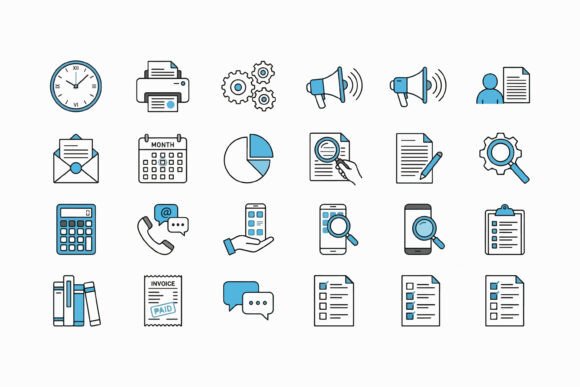
At their core, office symbols and business icons serve as a universal shorthand. In an era where attention spans are shorter than ever, text-heavy documents often fail to engage audiences effectively. A well-crafted icon representing a "team meeting," a "financial report," or a "creative idea" can bridge the gap between confusion and clarity in a split second. These illustrations are not merely decorative; they are functional tools that enhance communication and streamline information processing.
Consider the modern workplace. It is a hybrid environment blending physical offices with remote digital collaboration. In this context, visual consistency is key. When you use a cohesive set of business icons across your internal presentations, external marketing materials, and employee handbooks, you create a sense of order and professionalism. This visual harmony helps stakeholders navigate information more easily, reducing cognitive load and allowing the core message to shine through.
Why High-Resolution Formats Matter
When sourcing design assets, the file format is just as critical as the image itself. The illustration designs discussed here typically come in two primary formats: EPS and JPG. Understanding the difference ensures you get the best results for your specific project.
- EPS (Encapsulated PostScript): This is a vector-based format. Its greatest advantage is scalability. You can resize an EPS file from the size of a postage stamp to the size of a billboard without losing any quality or seeing pixelation. This makes it the ideal choice for large-scale prints like banners, wall posters, and packaging designs.
- JPG (Joint Photographic Experts Group): This is a raster format optimized for web use and standard printing. High-resolution JPGs are perfect for social media posts, story designs, and digital documents where file size needs to be manageable but clarity remains paramount.
Having access to both formats provides unparalleled flexibility. You can take a single concept—say, a stylized briefcase icon—and apply it seamlessly across a notebook cover (using EPS for crisp printing) and an Instagram story (using JPG for quick loading), maintaining brand integrity across all touchpoints.
Diverse Applications in Creative Projects
The versatility of business icon illustrations extends far beyond corporate boardrooms. Their clean lines and symbolic nature make them adaptable to a vast array of creative endeavors. Let's explore how these assets can elevate different types of projects.
Branding and Marketing Materials
For businesses, first impressions are everything. Flyers and cards adorned with professional office symbols immediately signal competence. Imagine a real estate agent distributing flyers featuring sleek icons of houses, keys, and handshake agreements. These visuals reinforce trust before the client even reads the text. Similarly, packaging design benefits immensely from these elements. A tech startup shipping products in boxes decorated with minimalist circuit board icons or gear symbols creates an unboxing experience that feels curated and thoughtful.
Furthermore, banners and wall posters in office spaces or retail environments use these graphics to guide behavior or highlight values. A poster displaying icons of lightbulbs and gears can inspire innovation among employees, while a banner at a trade show using clear, bold symbols can attract foot traffic more effectively than text alone.
Personal Organization and Education
Beyond commerce, these illustrations are powerful tools for personal organization and education. Teachers and educators frequently use office symbols to create engaging calendars, lesson plans, and classroom decorations. A calendar featuring distinct icons for "exam days," "field trips," and "homework deadlines" helps students visualize their schedule intuitively.
In the realm of scrapbooking and craft projects, hobbyists appreciate the aesthetic appeal of these designs. Incorporating business-themed elements into a planner or a memory book about a career milestone adds a layer of thematic depth. Whether it's decorating a notebook cover for a new job or creating custom wrapping paper for a colleague's retirement gift, these icons allow for personalized touches that mass-produced items often lack.
Digital Presence and Social Media
In the digital sphere, content is king, but context is queen. Social media posts and story designs require visuals that pop on small screens. Business icons provide the perfect focal point for infographics, motivational quotes, or announcement graphics. Because they are generally simple and high-contrast, they remain legible even on mobile devices. Using these illustrations as backgrounds or overlays can add texture and interest to a feed without overwhelming the caption text.
Clarifying Common Misconceptions
Despite their utility, there are some common misunderstandings regarding the use of stock illustrations and icons. One prevalent assumption is that such images are too generic to be effective. However, when selected carefully and customized with your brand's color palette, these icons become unique identifiers. The key lies in consistent application rather than the uniqueness of the individual shape.
Another misconception is that vector files (EPS) are too difficult for non-designers to use. While they do require vector editing software like Adobe Illustrator for modification, many users find that simply placing the EPS file into a layout program or sending it to a professional printer is sufficient. For those who need to edit colors or shapes, numerous user-friendly tools now exist that support vector editing, making high-quality design accessible to everyone.
Building a Broader Understanding of Visual Communication
Integrating business icons and office symbols into your workflow is more than just a cosmetic upgrade; it is a strategic move toward better communication. By utilizing high-resolution assets in formats like EPS and JPG, you ensure that your message is delivered clearly, whether it is printed on a massive banner or viewed on a smartphone screen.
The true power of these illustrations lies in their adaptability. They fit seamlessly into the fabric of modern life, supporting everything from corporate strategy and educational planning to personal creativity and home decoration. As we continue to navigate a world saturated with information, the ability to distill ideas into simple, recognizable symbols becomes an increasingly vital skill.
Whether you are designing a invitation for a corporate gala, creating home decorations for a home office, or developing a comprehensive design project for a client, remember that the right visual element can do the heavy lifting for your message. Embrace the versatility of business icons, experiment with different applications, and watch how these small graphical elements make a big impact on your creative output.
By understanding the purpose, significance, and practical relevance of these tools, you empower yourself to create work that is not only visually appealing but also deeply effective. So, the next time you embark on a design journey, consider reaching for a set of high-quality office symbols—they might just be the missing piece of your puzzle.