The Art of Contrast: Mastering Pink and Dark Green Watercolor Backgrounds for Modern Design
In the vibrant world of digital design and physical crafting, few color combinations command attention quite like the pairing of soft pink and deep dark green. This specific palette, often realized through watercolor backgrounds, has surged in popularity among creatives ranging from hobbyist scrapbookers to professional branding experts. But what makes this particular blend of hues so effective? To truly appreciate the value of a Pink and Dark Green Watercolor Background Set, one must understand the color theory behind it, the technical specifications that ensure quality, and the practical applications that bring these designs to life in everyday projects.
Why This Color Palette Works: A Lesson in Balance
At its core, the appeal of combining pink and dark green lies in the principle of complementary contrast. On the color wheel, red and green are opposites; when you soften the red into a blush or rose pink and deepen the green into a forest or emerald shade, you create a relationship that is both striking and harmonious. The soft pink tones offer warmth, femininity, and approachability, while the deep dark green shades provide grounding, elegance, and a touch of nature-inspired sophistication.
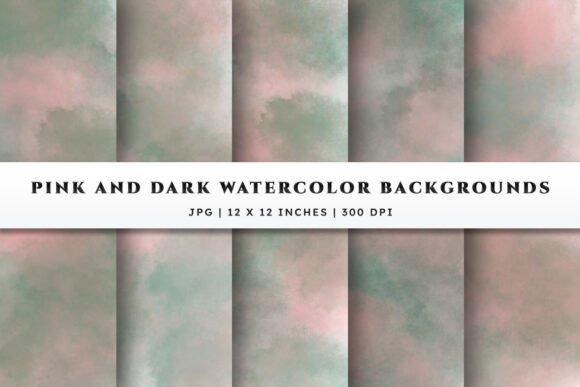
Many beginners assume that mixing these colors might result in a muddy or chaotic look, especially given their history in traditional painting. However, modern layered watercolor wash effects are designed specifically to avoid this pitfall. By utilizing a smooth watercolor texture, designers can ensure that the colors bleed into one another organically without losing their individual identity. This creates a balanced, modern look that feels fresh rather than dated. It captures the authentic feel of real watercolor paper, complete with subtle variations in pigment density, while maintaining a clean printable texture that is essential for professional outputs.
The Technical Foundation: Resolution and Format
For those new to digital assets, understanding the technical specifications of a background set is crucial for achieving high-quality results. A common misunderstanding is that any image found online can be resized indefinitely for print. This is rarely the case. High-quality design resources, such as the collection described here, are engineered with specific constraints to ensure versatility.
Consider the following standard specifications found in premium sets:
- Dimensions: Typically 12 × 12 Inches. This square format is the industry standard for scrapbooking pages, invitation cards, and social media posts, offering a perfect canvas for centered or symmetrical designs.
- Resolution: 300 DPI (Dots Per Inch). This is the gold standard for printing. Anything below 300 DPI may appear pixelated or blurry when printed on physical media like cardstock or sticker paper.
- File Format: High-Quality JPG files. While PNGs are great for transparency, JPGs are often preferred for full-background textures because they handle complex color gradients efficiently while keeping file sizes manageable.
- Delivery: Files are usually compressed into one ZIP file. Users must remember to extract these files before attempting to open them in design software.
These technical details are not just jargon; they are the backbone of a reliable choice for everyday creative projects. When a designer downloads a set with these specs, they know they can resize elements for a small business card or enlarge them for a poster without sacrificing clarity.
Practical Applications in Creativity and Business
The utility of a Pink and Green Watercolor Background extends far beyond simple aesthetics. In the modern economy of small businesses and DIY culture, these assets serve as foundational building blocks for a wide array of products. Let us explore how different groups utilize these resources.
For Crafters and Scrapbookers
Scrapbooking is the art of preserving memories, and the background sets the emotional tone of the page. The juxtaposition of floral pinks against earthy greens evokes feelings of growth, romance, and nostalgia. Crafters use these backgrounds as the base layer for photo mats, journaling cards, and embellishments. Because the texture mimics real paper, it blends seamlessly with physical stickers and hand-written notes, creating a cohesive hybrid project that bridges the digital and analog worlds.
Cricut and Silhouette Users
The rise of electronic cutting machines has revolutionized home crafting. Users of Cricut and Silhouette devices often require "Print then Cut" files. A high-resolution watercolor background is perfect for this workflow. A user can print the pink and green design onto specialty paper and then use their machine to cut out precise shapes for stickers, labels, or gift tags. The versatile nature of these designs means they can be used for seasonal decor, wedding favors, or personalized party supplies.
Small Business Owners and Branding
In the realm of small business, branding is everything. A bakery, a florist, or a boutique clothing store might adopt this color palette to convey a sense of organic luxury. These backgrounds are ideal for creating:
- Product Packaging: Lining boxes with custom-printed tissue paper featuring the watercolor wash.
- Social Media Graphics: Creating Instagram stories or Pinterest pins that stand out in a crowded feed.
- Business Cards and Thank You Notes: Adding a touch of elegance to customer interactions.
By using a pre-designed, high-quality background, business owners save time on graphic design while ensuring their visual identity remains consistent and professional.
Clarifying Common Misconceptions
Despite their popularity, there are a few assumptions about watercolor backgrounds that need clarification. First, many believe that "watercolor" implies a lack of structure or professionalism. On the contrary, modern digital watercolor sets are meticulously crafted to provide structure within chaos. The layered wash effect is controlled to guide the eye, making text placement easier rather than harder.
Secondly, there is a notion that these backgrounds are only suitable for feminine or spring-themed projects. While pink and green do evoke botanical themes, the inclusion of dark green adds a level of seriousness and depth that works beautifully for year-round branding, autumnal designs, or even sophisticated evening event invitations. The darkness of the green anchors the lightness of the pink, preventing the design from feeling too frivolous.
Integrating Technology and Tradition
The existence of these digital assets represents a fascinating intersection of technology and tradition. Traditionally, achieving a perfect watercolor wash required years of practice, specific papers, and the right humidity conditions. Today, a printable designer can access that same aesthetic instantly via a download. This democratization of design tools allows individuals to focus on the creative arrangement and storytelling aspects of their work rather than getting bogged down in the technical difficulties of painting.
Furthermore, the ability to layer these digital files in software like Photoshop, Procreate, or Canva offers a level of flexibility that physical paint cannot. Designers can adjust opacity, blend modes, and saturation to tailor the background to their specific needs, ensuring that the final product is uniquely theirs.
Conclusion: A Versatile Tool for the Modern Creator
In summary, a Pink and Dark Green Watercolor Background Set is more than just a pretty image; it is a versatile tool that empowers creators across various disciplines. Whether you are a student learning graphic design, a parent making birthday invitations, or an entrepreneur launching a new product line, understanding the value of high-resolution, well-composed backgrounds is essential.
The combination of soft pinks and deep greens offers a timeless aesthetic that balances energy with calm. When paired with the technical reliability of 300 DPI resolution and standard 12x12 inch formats, these assets become indispensable resources. They bridge the gap between the tactile warmth of traditional art and the efficiency of modern digital workflows. By incorporating these elements into your projects, you elevate the visual quality of your work, ensuring that your creations are not only seen but felt. As you continue to explore the vast landscape of digital design, remember that the right background is the foundation upon which all great visuals are built.