Unlocking the Charm of Vintage Cottage Kitchen Patterns for Modern Design
In the ever-evolving world of interior design, textile creation, and digital art, few aesthetics possess the enduring appeal of the vintage cottage kitchen. This style is not merely a trend; it is a celebration of nostalgia, warmth, and the simple joys of domestic life. At the heart of bringing this aesthetic to life lies a powerful design tool: the seamless repeat pattern. Specifically, collections featuring 10 vintage cottage kitchen patterns offer designers, crafters, and small business owners a versatile foundation for creating products that resonate deeply with consumers seeking comfort and authenticity.
Understanding the significance of these patterns requires looking beyond their visual appeal. It involves recognizing how they function technically, why they connect emotionally with audiences, and how they can be practically applied across various mediums—from fabric printing to digital stationery. This guide explores the essence of vintage cottage kitchen motifs, demystifies the concept of seamless tiling, and illustrates how these assets fit into modern creative workflows.
The Essence of the Vintage Cottage Aesthetic
The term "cottagecore" has permeated popular culture, but the roots of the vintage cottage kitchen go much deeper. It represents an idealized version of rural life, characterized by soft, muted colors, natural materials, and a sense of lived-in history. When we talk about patterns inspired by this theme, we are referring to visual elements that evoke memories of grandmother's recipe cards, sun-dried linens, and hand-painted ceramics.
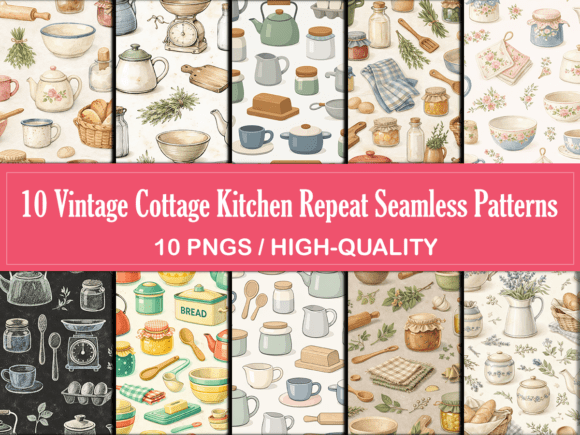
A typical collection of 10 vintage cottage kitchen repeat seamless patterns might include motifs such as:
- Botanical Elements: Sprigs of lavender, wildflowers, herbs like rosemary and thyme, and climbing vines.
- Kitchenware Icons: Vintage teapots, mason jars, rolling pins, whisk, and ceramic pitchers.
- Textural Details: Gingham checks, subtle stripes, floral toile, and rustic wood grain effects.
- Nostalgic Typography: Hand-lettered labels or script fonts that mimic old-fashioned signage.
The color palette is equally important. Unlike the bold, high-contrast colors of modern minimalism, vintage cottage designs rely on soft pastels, creamy whites, sage greens, dusty blues, and warm earth tones. These hues create a welcoming atmosphere that feels timeless rather than dated. For designers, mastering this palette is key to evoking the right emotional response—comfort, tranquility, and a connection to nature.
Why Seamless Patterns Matter in Design
For those new to graphic design or textile printing, the concept of a seamless repeat pattern might seem technical, but its purpose is purely practical and aesthetic. A seamless pattern is an image designed to tile infinitely in any direction (horizontally and vertically) without showing visible lines or breaks where the images meet.
Imagine wrapping a gift box. If the paper had a visible grid where the image stopped and started again, the illusion of a continuous design would be broken. Similarly, when printing fabric for an apron or designing a background for a website, the pattern must flow naturally. The 10 vintage cottage kitchen patterns mentioned in many creative bundles are engineered specifically for this purpose. They are "print and digital ready," meaning the mathematical alignment of the elements has already been solved by the creator.
This technical precision allows users to focus on creativity rather than mechanics. Whether you are a beginner using Canva or an experienced professional working in Adobe Illustrator, having pre-made seamless files saves hours of work. It ensures that whether you are covering a large wall mural or a small journal cover, the integrity of the design remains intact.
Practical Applications Across Industries
The versatility of vintage kitchen patterns extends far beyond simple decoration. In today's gig economy and creator-driven market, these assets are vital for product development. Here is how different sectors utilize these designs:
1. Textile and Fashion Design
Fabric printing is perhaps the most traditional use case. Designers use these patterns to create unique textiles for kitchen décor, such as tea towels, oven mitts, and aprons. The nostalgic feel of a vintage pattern transforms a functional item into a piece of art. Furthermore, these designs are increasingly popular in fashion, appearing on summer dresses, scarves, and even children's clothing that embraces the farmhouse aesthetic.
2. Paper Goods and Stationery
The rise of digital planning and the enduring love for physical journals have created a huge demand for patterned paper. These seamless files are perfect for:
- Wrapping Paper: Creating custom rolls for boutique shops or holiday gifts.
- Scrapbooking: Adding background layers to memory books focused on family recipes or home life.
- Recipe Cards: Designing printable cards that customers can use in their own kitchens, enhancing the user experience with thematic visuals.
3. Print-on-Demand (POD) Business
For entrepreneurs running stores on platforms like Etsy, Redbubble, or Society6, these patterns are gold mines. Because the files are high-quality PNGs, they can be instantly uploaded to mockup generators. A single pattern can be applied to phone cases, laptop skins, throw pillows, and shower curtains. This scalability allows small business owners to expand their product lines without needing to hire a pattern designer from scratch.
Bridging Tradition and Technology
It is a common misconception that "vintage" implies "outdated" or incompatible with modern technology. On the contrary, the vintage cottage kitchen pattern is a prime example of how traditional aesthetics thrive in the digital age. The files provided in these collections are optimized for both print and screen.
In the realm of web design and social media, these patterns serve as engaging backgrounds for blogs, Instagram stories, and Pinterest pins. A food blogger, for instance, might use a subtle gingham or floral repeat pattern as a backdrop for their recipe video thumbnails. This creates brand consistency and immediately signals to the viewer that the content is related to home cooking and comfort food.
Moreover, the accessibility of these tools has democratized design. You do not need a degree in fine arts to create professional-looking products. With easy-to-use seamless files, a hobbyist crafter can produce goods that rival those of established brands. This fusion of old-world charm and new-world convenience is what makes the cottage aesthetic so resilient.
Common Misunderstandings About Pattern Usage
When working with pattern libraries, beginners often encounter a few hurdles. Clarifying these can save time and frustration:
- Resolution Matters: Always check the DPI (dots per inch) of the file. For print projects like fabric or wrapping paper, you generally need 300 DPI to ensure crisp lines. Digital projects may only require 72 DPI, but higher resolution is always safer for future scaling.
- Color Profiles: Print designs typically use CMYK color modes, while digital screens use RGB. High-quality pattern packs often provide files that work well in both, but it is essential to understand your specific output needs.
- Licensing: Not all patterns are free for commercial use. When purchasing a set of 10 vintage cottage kitchen patterns, always review the license agreement. Most allow for unlimited personal and commercial projects, but some may restrict resale of the raw files themselves.
Building a Cohesive Brand Identity
For creators, consistency is key. Using a curated set of patterns helps build a recognizable brand identity. If a small business sells handmade soaps, using a consistent lavender and sage pattern across their packaging, website, and social media creates a cohesive narrative. The customer begins to associate those specific visual cues with the quality and vibe of the brand.
The timeless decorative details found in cottage kitchen patterns—such as hand-drawn illustrations of lemons or rustic typography—add a layer of personality that generic stock photos cannot match. They tell a story of craftsmanship and care, which is exactly what modern consumers are looking for in an era of mass production.
Conclusion: Embracing the Warmth of Design
The allure of the vintage cottage kitchen lies in its ability to make spaces and products feel like home. By utilizing a collection of 10 vintage cottage kitchen repeat seamless patterns, designers and makers gain access to a toolkit that bridges the gap between nostalgic charm and modern functionality. Whether you are printing fabric for a local boutique, designing a digital planner, or creating custom wrapping paper for your Etsy shop, these patterns offer a reliable and beautiful foundation.
As we continue to navigate a fast-paced, digital-heavy world, the desire for tangible, comforting aesthetics only grows stronger. These patterns are more than just images; they are invitations to slow down, appreciate the details, and bring a touch of cozy nostalgia into everyday life. By understanding their technical properties and creative potential, you can unlock endless possibilities for your projects, ensuring that your designs not only look good but also feel right.
So, whether you are a seasoned designer or just starting your creative journey, consider how these soft muted colors and nostalgic kitchen elements can transform your work. The perfect pattern is waiting to tile seamlessly into your next big idea.